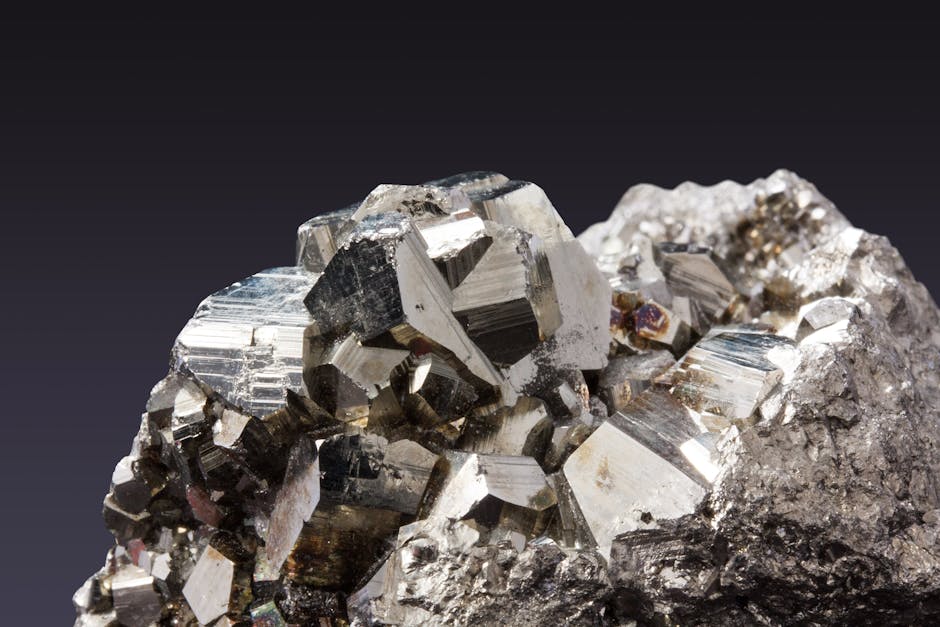
The Role of Colemanite in Boron Mineralogy and Global Industry Applications
Boron is an essential element that plays a critical role in modern technology and industry, yet its natural occurrence remains limited to a few specialized mineral deposits. Among these, colemanite stands out as one of the most significant sources of boron, forming under unique geological conditions that make it both rare and highly valued.
This article delves into the world of boron minerals, focusing specifically on colemanite’s formation processes, global distribution patterns, industrial applications, environmental impact assessments, and future research directions. Understanding this mineral’s properties provides insight into how nature shapes such vital resources while also highlighting their importance across various sectors.
Geological Formation of Colemanite Deposits
Colemanite forms primarily through hydrothermal alteration processes occurring within sedimentary basins rich in calcium carbonate and magnesium silicates. These transformations take place deep underground where hot fluids interact with host rocks over extended periods.
High-pressure environments are crucial during colemanite genesis, typically associated with tectonic activity along continental margins or near ancient oceanic crust remnants. The presence of evaporites further enhances these chemical reactions by providing necessary elements like sodium and sulfate ions.
- Tectonic Setting: Most known deposits occur around subduction zones where metamorphism facilitates mineral redistribution
- Temperature Range: Forms best between 300°C to 500°C, aligning with mid-crustal levels
- Precipitation Mechanism: Involves evaporation-driven concentration of dissolved boric acid solutions
Mineralogical studies show that colemanite often coexists with other borate minerals like ulexite and boracite, indicating similar but distinct geochemical pathways. This diversity offers clues about varying degrees of hydration states present during crystallization events.
Regional variations in elemental availability influence final composition ratios. For example, areas with higher magnesium concentrations tend to produce more hydrated variants compared to those with lower Mg content.
Global Distribution Patterns of Colemanite Resources
Colemanite occurrences span several continents though they remain geographically constrained due to stringent formation requirements. Turkey hosts some of the largest reserves located mainly in Eskişehir Province, where extensive mining operations have been ongoing since early 20th century.
In North America, California’s Mojave Desert contains notable deposits, particularly within the Kramer district. These formations were historically exploited for wartime production needs during World War II era when demand surged significantly.
Australia also possesses considerable potential although commercial extraction has only recently gained momentum following technological advancements enabling deeper exploration techniques.
Other regions including China, Russia, and parts of South America exhibit promising indicators suggesting undiscovered reserves might exist beneath current surface features. However, definitive confirmation requires thorough geological surveys before development plans can proceed.
Economic Significance and Industrial Uses of Colemanite
The economic value of colemanite lies predominantly in its high purity level which makes it ideal raw material for manufacturing diverse products ranging from glass fiber reinforcement agents to flame retardants used extensively in construction materials.
One key application involves producing borosilicate glasses renowned for thermal shock resistance found commonly in laboratory equipment and cookware items. Its ability to withstand extreme temperature fluctuations stems from structural modifications induced by boron incorporation.
Additionally, colemanite serves as precursor substance for synthesizing borax compounds widely applied in cleaning detergents and agricultural fertilizers. It contributes essential micronutrients promoting plant growth without causing soil degradation issues.
Emerging fields such as nanotechnology benefit greatly from colemanite-derived substances owing to unique optical properties exhibited at microscopic scales. Researchers continue exploring novel ways to harness these characteristics for advanced electronic components.
Environmental Considerations in Mining Operations
Mining activities related to colemanite extraction pose challenges concerning land disturbance and water resource depletion. Open pit methods employed in many active sites lead to substantial topographical changes altering local ecosystems permanently.
To mitigate negative impacts, companies implement reclamation strategies involving revegetation programs designed to restore native flora species post-mining phases. These efforts aim at maintaining biodiversity levels comparable to pre-extraction states wherever possible.
Water management systems play equally important roles in preventing contamination risks associated with runoff containing trace metal pollutants potentially harmful to aquatic life forms inhabiting nearby streams or rivers.
Regulatory frameworks vary globally depending upon national policies governing permissible pollution thresholds. Compliance with international standards ensures sustainable practices become integral aspects rather than mere compliance measures alone.
Technological Innovations Enhancing Extraction Efficiency
Advancements in remote sensing technologies enable precise identification of prospective deposit locations using satellite imagery analysis combined with ground-penetrating radar scans. Such tools drastically reduce exploratory drilling costs traditionally required prior to initiating full-scale operations.
Digital mapping software integrated with geographic information systems allows three-dimensional visualization capabilities aiding engineers during mine design stages. Precise spatial data helps optimize excavation routes minimizing unnecessary earth movement expenses.
Automation systems now control conveyor belts transporting processed ore efficiently reducing manual labor dependency thus improving overall productivity rates achieved per unit time invested.
Data analytics platforms collect real-time operational metrics facilitating predictive maintenance schedules ensuring machinery downtime stays minimized thereby enhancing return-on-investment calculations substantially.
Sustainable Practices in Modern Colemanite Production
Leading producers adopt closed-loop recycling methodologies where waste slurry generated during refining processes gets reused instead of being discarded outrightly. This approach conserves freshwater supplies simultaneously decreasing effluent discharge volumes entering surrounding environments.
Energy consumption optimization initiatives involve retrofitting existing facilities with energy-efficient lighting systems alongside implementing solar panel arrays capable of powering auxiliary functions independently from primary grid connections.
Community engagement programs ensure local populations receive tangible benefits beyond employment opportunities; educational scholarships funded through corporate social responsibility budgets empower youth generations pursuing STEM-related careers.
Continuous monitoring protocols track air quality indices regularly updating stakeholders regarding emissions performance against established regulatory benchmarks set forth by governmental agencies overseeing environmental protection mandates.
FUTURE RESEARCH DIRECTIONS AND INNOVATIONS IN BORON MINERAL STUDIES
Ongoing scientific investigations explore genetic relationships among different types of borate minerals aiming at developing better classification schemes based upon molecular structures rather than traditional morphological criteria alone.
Experimental petrology experiments simulate varied pressure-temperature regimes recreating natural conditions believed responsible for forming particular mineralogical associations observed today within actual rock samples collected from field expeditions worldwide.
Isotope tracing analyses provide insights into migration paths followed by boron atoms traversing through crustal layers helping scientists understand long-term geochemical cycles influencing current-day mineral distributions seen across planet Earth’s surface.
Collaborative projects between academic institutions and private sector entities foster innovation pipelines translating theoretical discoveries rapidly into practical implementations benefiting society at large via enhanced product offerings derived from improved processing efficiencies realized through new methodological approaches developed jointly.
Conclusion
Colemanite represents not only a commercially viable source of boron but also holds immense scientific significance attributable to intricate formation mechanisms dictating its existence within specific geological settings globally distributed yet relatively localized.
By embracing sustainable extraction principles coupled with continuous technological innovations aimed at maximizing output yields while preserving ecological integrity, future prospects appear promising allowing continued utilization without compromising planetary health considerations imperative for intergenerational equity objectives envisioned by contemporary civilization goals.

news is a contributor at Colemanite. We are committed to providing well-researched, accurate, and valuable content to our readers.